 SOUNDTRACK: TINDERSTICKS-BBC Sessions (2007).
 Another great entry in the BBC Sessions series, this collection of 26 recordings, shows the band in fine form. This works as a pretty excellent Greatest Hits collections (and surprisingly for a BBC Sessions recording there is only one duplicate song).
On the other hand, there’s not a whole lot of difference between these recordings and the originals. Some notable exceptions include “Traveling Light” and “Buried Bones” which do not feature the female duet. “Her” is also notably different since it’s on piano and not guitar.
But I have no criticism about the quality of the recordings. The band sounds wonderful. Staples’ voice is great and the orchestration is perfect. And, of course the recording quality is superb (as are all of the BBC sessions that I have are).
If you have the Tindersticks records already, there’s no compelling reason to get this set, but if you’re a fan of the band, it’s nice to have some slightly different versions of these great songs.
[READ: May 18, 2011] 2 book reviews
 This month’s review is of two books. The first is Paula Fox’s new book, News from the World: Stories and Essays. (The book is also reviewed by Joan Acocella in The New Yorker, May 16, 2011 issue–she takes a much different angle than Zadie, and has a lot more biographical background, so the reviews work in conjunction very nicely). I don’t know Fox (although perhaps I should, she has written a number of adult books and tons of children’s books), but Fox’s Desperate Characters has been championed by Jonathan Franzen and David Foster Wallace.
Fox sounds like an interesting character (her father was “a writer and a drunk”) and her granddaughter is Courtney Love. And Zadie asserts that Fox has cultivated self-control and empathy and (in Fox’s own words) “a living interest in all living creatures.” And in this new collection the interest spreads across fiction, memoir, lecture and essays (with no formal distinction between genres).
Although Zadie is fond of Fox (especially her fiction) she’s harder on Fox the essayist. She suggests that many of Fox’s essays seem to boil down to the cliché: things were better back then. But Zadie does make her fiction sound wonderful. Acocella’s review is similar, saying that no one should start reading Paula Fox with this collection–the reader should go back and start with Fox’s earlier, better works.
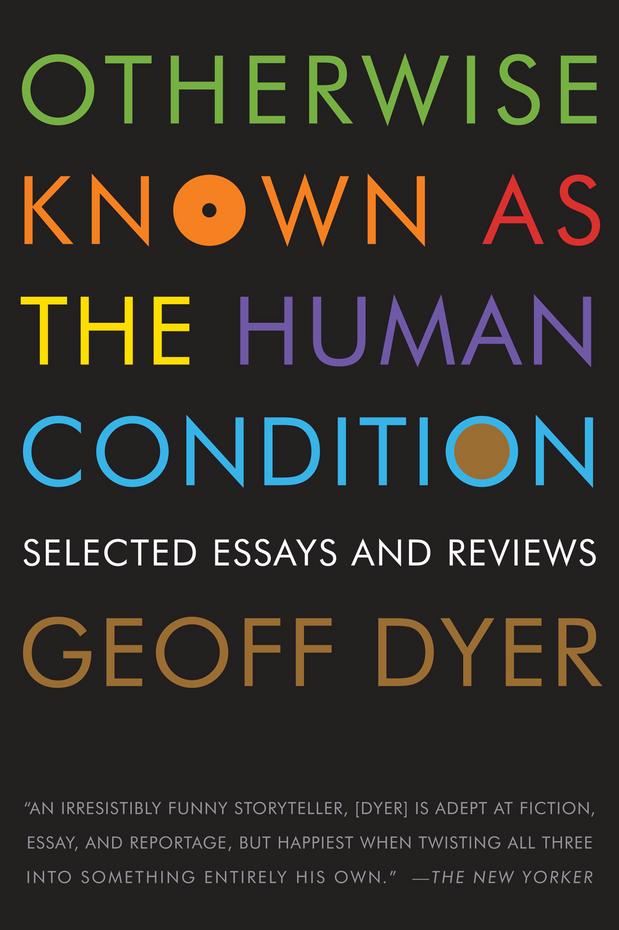 Geoff Dyer’s Otherwise Known as the Human Condition: Selected Essays and Reviews is similar to Fox’s book in that Dyer tackles many different subjects. Zadie reminds us that Dyer seems to fully embrace whatever subject he is investigating–whether it’s jazz or D.H. Lawrence. He gets absorbed into the subject, writes his piece and then more or less gives up on the subject.
This book is no different. Indeed, Zadie says that Dyer seems to be always questing to understand someone else. Part of the book is his opinions about wonderful photos or paintings. As Zadie writes,
Quite suddenly he went from not being interested in photography, to being very interested in it, to–and this is the step 99 percent of normal people don’t take–getting so interested in it he wrote a whole book about it. Yet in all that time, as he explains, he never bought a camera.
Zadie has praise for Dyer in general (he has a refined shit detector, which makes for excellent opinion and analysis), but she finds him too self-defensive of his ideas. Overall, though, she believes his memoir is wonderful.
I’m not interested enough in Dyer’s reviews to read his book, but ll this focus on Fox makes me want to read not her new book, but at least something of her older books.

 I Just Read About That...
Leave a comment