 SOUNDTRACK: POKEY LaFARGE-Tiny Desk Concert #122 (April 20, 2011).
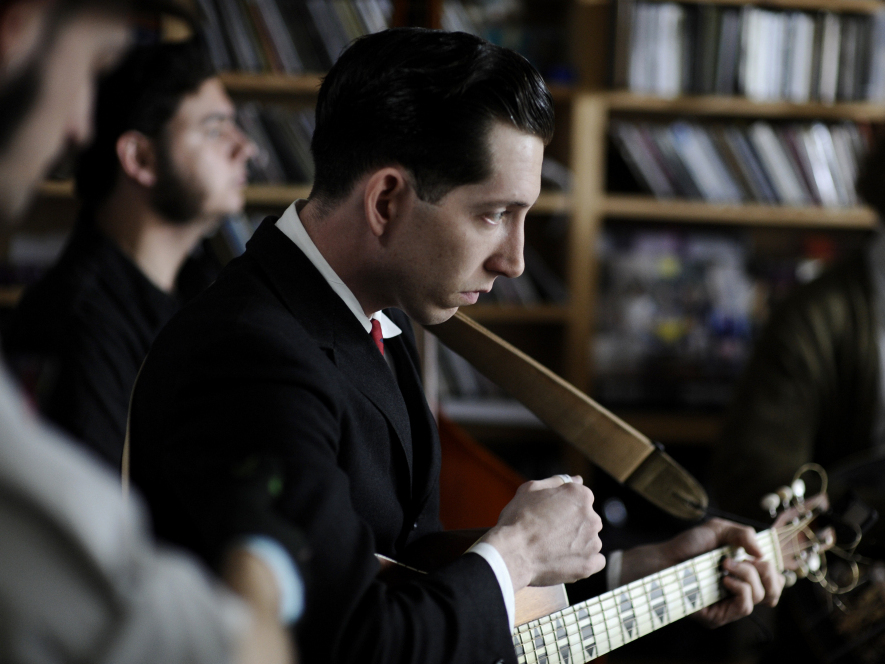 I had never heard of Pokey LaFarge before this Tiny Desk concert was sitting in my download folder. In fact, the notes on the page say that they had never heard of him before they saw him wandering around SXSW. And then he climbed onstage and played a great set.
LaFarge plays an old-timey style of music. It’s a kind of Squirrel Nut Zippers retro sound. As with the Zippers, I love their music in small doses. And so, this Tiny Desk set is a perfect little sample of LaFarge’s music: happy, bouncy, jazzy. There’s an upright bass solo, songs about being happy and singing “La La La” and other upbeat stuff. It’s quite satisfying.
Especially if, as the notes say, you use it as a kind of antidote to the raucous music that you generally listen to. A Pokey LaFarge song will perk you out of any self-inflicted gloom. I just don’t need to hear more than three.
[READ: April 15, 2011] 2 book reviews
It looks like Zadie Smith has become a regular fixture at Harper’s. I’m undecided if I’m going to review all of her book reviews from now on (perhaps I’ll lump some together in one post). But in the meantime, I’m mentioning this one primarily because she reviews the story that I mentioned in yesterday’s post: Edouard Levé’s Suicide.
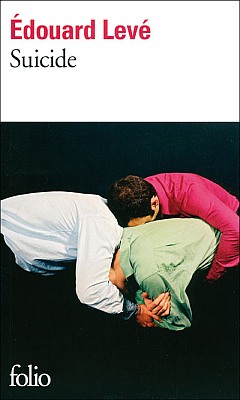 Smith looks into Levé’s past work (like Amérique in which he went to American towns that shared a name with another city in another country–it’s mostly photographs is run of the mill, slovenly tract housing). He also write Autoportrait, a paragraph-free novel which consisted “solely of authorial assertions.” As Smith amusingly notes, “That mixture of thoughtfulness and self-regard, honest interrogation and mere posing–is I were fifteen Autoportrait would be my bible” (67). [I love Zadie Smith for thinking like this].
Ultimately, Zadie likes Suicide (I wasn’t that impressed by the excerpt). She says it pairs very well with Autoportrait because Autoportrait was entirely made of “I” sentences while Suicide is made of “You ” sentences, as if they were a matched set. She says the fragments are sharp and overwhelmingly sad. I’m not convinced, although I agree that the opening was quite gripping.
 The second book she reviews is Seven Years by Peter Stamm. Bringing her personal aesthetic to it, she says she wishes she lived like the photograph on the cover. Zadie says that this book gets her personally because she was riveted by the story even though it really undermined her core beliefs. How so?
Well, as she notes, a feminist reading of the book suggests: “We became your liberated partners and now you hate us for it?” For Alex, the narrator is a misogynist. He loves Sonia (enough to marry her) but does not feel passion towards her. Meanwhile, he meets Ivona, a heavy, poorly dressed peasant (who is possibly insane) and Alex immediately falls for her: “Ivona bored me, we had nothing to say to each other. It was only in bed that I liked being with her, when she lay there heavy and soft in her ugly clothes and I felt completely free and uninhibited” (70).
The Seven Years of the title refers to a seven-year itch in his marriage to Sonia. And Zadie finds the story compelling and interesting until, as she says, “I’d almost finished the novel before I realized he had made an argument I would have violently rejected had it been presented to me in any other form than this novel.”
A powerful review but I’m still not sure if it’s for me.

 I Just Read About That...
Leave a comment