 SOUNDTRACK: FLEET FOXES-Live at The Black Cat, Washington, DC, July 7, 2008 (2008).
 I still love the Fleet Foxes debut album, and I listen to it quite often. One of the most impressive aspects of the band is their amazing harmonies. So how does a band that is so vocal-centric perform live?
In an interview included with the concert, Bob Boilen asks that question. They explain that the bigger venues are a bit harder because they have to crank up their monitors. They also try to stay close to each other to be able to hear the harmonies clearly. Well, they did something right because the harmonies sound very impressive here.
The main problem comes because lead singer Robin Pecknold is sick. As in, just getting over a major cold, sick. As in, he admits that their last few shows were something of a rip off for the attendees. Tonight’s show, he says is half a ripoff. And that is most evident in my favorite Fleet Foxes song, “Mykonos” in which Pecknold’s voice cracks with abandon. I would feel bad for the audience if the band wasn’t so personable and friendly and generally cool. They make the best of a rough situation, and again, the backing vocals sound fantastic.
There are also a ton of delays in this show. Most of them seem technical, although there seems to be a lot of tending to Pecknold’s voice, too. But as I said, the band is engaged with the audience, telling stories (someone in the band is from DC and he asks if anyone went to high school there), and generally keeping everyone entertained. It’s probably not their best show ever, but it still sounds great. You can listen and download at NPR.
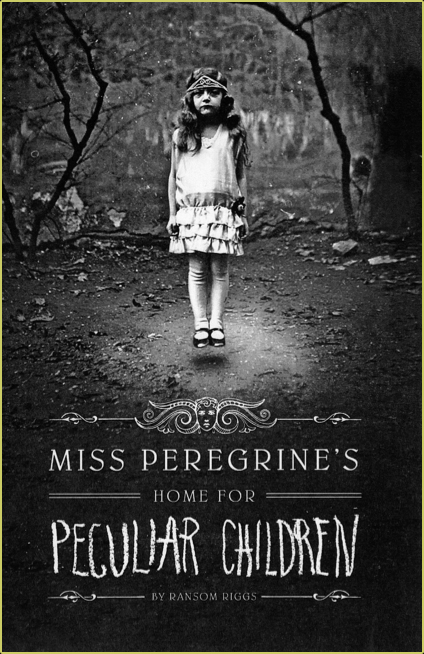
[READ: March 27, 2011] Miss Peregrine’s Home for Peculiar Children
Quirk Books, publishers of mash-ups like Pride & Prejudice & Zombies (as well as many other, well, quirky, titles) has published this fantastically exciting novel.
The cover depicts a creepy girl who is hovering off the ground. But the girl herself is SO creepy that I didn’t even notice the hovering part. She is just one of the peculiar children within the book. And this picture is one of 50 included within the book (I’m only bummed that two pictures were not available in my copy).
So the story opens with Jacob Portman talking about his grandfather. His grandfather (Abe) was a young boy in Poland during the 1940s. When the Nazi’s invaded, his family was killed and he was sent to Wales, to the titular Miss Peregrine’s Orphanage (not widely known as a home for peculiar children). But as details emerge from his grandfather’s version of the tale, things seem not right.
Abe talks about the monsters that chased him out of Poland–but he wasn’t describing Nazis, he was describing actual monsters, with multiple tongues and horrifying faces. They followed him to Wales and were actually chasing him to that very day, in America. And when he talked about Miss Peregrine’s house, he talked about the special kids who live there: the girl who could call forth fire out of thin air, the girl who could levitate, and the boy who had bees living inside of him.
Of course, that was all nonsense, just post traumatic stress from being attacked by Nazis, right?
That explanation works until the night that Abe is murdered. He calls Jacob for help (they think he is going senile). When Jacob gets to his house, he finds the screen door torn open and Abe missing. The follow a trail and find Abe, bleeding in the woods. Jacob thinks he can see the same kind of monster that Abe had always described lurking right nearby in the woods. Although Jacob’s friend (who drove them to Abe’s house), didn’t see anything.
And now, Jacob’s dreams are plagued by scary monsters. And he can’t get his grandfather’s cryptic last words out of his head. Time to see a therapist, obviously.
At Jacob’s sixteenth birthday not too long after Abe’s death, one of the presents he receives is a book that belonged to his grandfather. It was inscribed to Jacob, and it contains a letter. A letter which suggests that Miss Peregrine’s House was very real, and that maybe, just maybe, Abe wasn’t crazy after all.
The rest of the book is set in Wales (how many stories can say that?). When Jacob arrives, he gets some local thugs to escort him across the island to the haunted house. For indeed, Miss Peregrine’s house is bombed to hell. There is no evidence of anyone having lived there for fifty years. It turns out the Nazis dropped a few bombs on the coast of Wales and one scored a direct hit on the house. There is precious little of anything in the house. But after more exploring, Jacob finds an old chest (the way he gets it open is hilarious). And once he begins rooting through the photos, he hears someone calling out to “Abe.”
And that’s all I’m going to reveal about this great book. It is a wonderful story of the supernatural, time travel, time bending, ornithology, and sheep.
The writing is wonderful. By the third or fourth chapter I was totally hooked and simply couldn’t put the book down.
The story gets scary in places, but never scarier than say Harry Potter. And yet the tension is wonderful, with everyone in serious danger. There’s also the superb conflict: do you stay with new friends who need your help, or do you return to your family who may also need your help? And there are a few (more) surprises at the end that really make you question what you thought you knew in the story.
The very ending of the book is something of a puzzle. There’s the possibility of a sequel (or indeed a series). And yet, at the same time it ends satisfactorily enough: things are going to have to be different for everyone. If there is a sequel, I’m not sure how Riggs will be able to include more pictures–which seems to be an important part of the story, but the story will no doubt be engaging.
As for those pictures, they really add something to the piece. At the same time they don’t make Riggs lazy in his descriptions. They add a cool, creepy feel to an already creepy book (although I received a poster of the cover of the book and there’s no way I was hanging THAT up in my house).
Sarah and I had a discussion about whether or not this was a YA book. I’m saying that it is, and I’m sticking with it. She hasn’t read it, but said that just because the protagonist is sixteen doesn’t mean that it is YA. Nevertheless, I feel like it addresses some pretty important issues about growing up, family, and friendship.
I hope this story does very well, and if there happens to be a sequel, I’ll certainly read that, too.
Oh, and the name Ransom Riggs sounded really familiar to me. Turns out he writes for Mental Floss. You can read more about him (and his other fascinating books) at his website.

 I Just Read About That...
Leave a comment