
SOUNDTRACK: SWANS-“Can’t Find My Way Home” (1989).
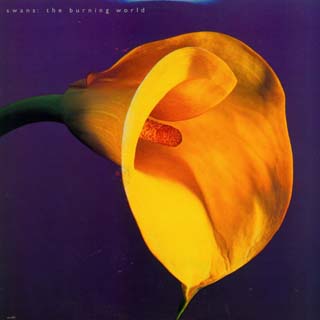 In the Swans review yesterday, I mentioned this as a song that was as far afield from early Swans as was imaginable. This is a cover of the Blind Faith song and it is surprisingly faithful. In fact, the original song features a voice that is so falsetto’d it’s almost higher than Jarboe’s.
The big difference here is that Jarboe is an unusual lady and her voice has a weird almost strangled quality to it which adds an air of longing to the song that the original doesn’t. There’s also an ethereal quality to the music which contrasts with the original’s folk styling. Not to mention that the production on this version is better.
I also happen to think that the Swan’s guitar intro (while less technically accomplished) is more intriguing. Not bad for an industrial band.
[READ: February 20, 2011] Consider David Foster Wallace [essays 7-9]
The group read of this book seems to have come to a halt. Coincidentally, so had my reading of it. So, I decided to finish up the last few essays of the book to have it done in time for the April 15th release of The Pale King (yay!).
It’s been three months since I last posted about this book so I’ll give my disclaimer: because I don’t have a lot to say about the pieces (I’m not an academic anymore), I’m only going to mention things that I found puzzling/confusing. But be assured that if I don’t mention the vast majority of the article it’s because I found it interesting/compelling/believable. I don’t feel comfortable paraphrasing the articles’ argument, so I won’t really summarize.
KIKI BENZON-”’Yet Another Example of the Porousness of Certain Borders’: Chaos and Realism in Infinite Jest”
This was another article where I felt that the premise of the argument was completely valid. And yet some of the information presented within the article–while also completely valid–didn’t really support the conclusion. It felt like there were maybe two ideas at work here.
The idea that the “borders” of Ennet House and E.T.A are porous is well argued and established. And of course, the borders of the U.S and Canada are ever changing. These were well argued aspects of the novel.
When Benzon starts talking about “big R-Realism,” however, it felt like she went beyond the scope of the paper. From the way I took it, the paper was going to focus on the text of IJ itself and not so much DFW’s claims to realism or postmodernism as an author. I understand that these are components of the book, but it was strange to me that the article suddenly went beyond the borders of the book. I guess it seemed like if you were going to go that large with the scope of the argument the article would have to be a lot longer.
But as I said, within the article itself I thought everything was well done and convincing.
MATT TRESCO-“Impervious to U.S. Parsing: Encyclopedism, Autism and Infinite Jest”
This was a fascinating article although I’m not sure if I agree with it. Well, actually I sort of agree with it, but I’m not exactly sure if Tresco is going as far as he might be going. Nebulousness aside, the gist here is that Tresco argues that IJ, especially in the character of Hal, is an example of an autistic novel.
Tresco’s arguments are convincing: aspects of autism are visible throughout the book (especially Hal in the beginning of the novel) even though no one is labeled as autistic. But that’s where I have to draw the line. As an uber-text for looking at autistic people in fiction, I think it works well. However, if Tresco is arguing that DFW intended this as a book about autistic people, I’m not sure that I agree. It’s obvious that DFW would have known about autism (he clearly studied the DSM), but without primary source material I won’t go that extra step (again, I’m not sure if Tresco is arguing that far or not).
CHRISPTOPHER THOMAS-“Infinite Jests: David Foster Wallace and Laurence Sterne”
Because I’m a fan of Laurence Sterne, I enjoyed this article very much. Like the previous article, this article suffers from what I think of as “academic un-realism.” By that I mean it’s fairly easy to see connections between a new novel and an earlier novel, yet unless you know the author intended them, they’re all just speculation. This is fairly common in academic work (I have done it myself).
Thomas states that there’s no commentary from DFW about his referencing Laurence Sterne. Given that, it’s hard for me to believe that you can actually prove anything regarding DFW’s referencing Sterne. Now, I would find it absurd to think that DFW didn’t read (and didn’t love) Tristram Shandy. Any reader of post-modern texts couldn’t get anywhere without reading the grandfather of the genre. So he must have read it.
And that makes most of Thomas’ arguments seem reasonable that there was some influence from TS on IJ. And yet, why did DFW never mention it? He seems to always mention those who have influenced him, almost as a badge of respect. So it seems odd that he never mentions Sterne.
Having said all that, Thomas brings up a lot of textual examples that make for a very compelling case. And, as I said, I can’t imagine that DFW didn’t enjoy TS, so I think this whole argument succeeds.

 I Just Read About That...
Leave a comment