 SOUNDTRACK: LOS CAMPESINOS! Live in studio at WEXP, July 31, 2008 (2008).
 For this brief in studio performance Los Campesinos! play four songs from their debut album Hold on Now, Youngster. The band sounds great in this setting. I don’t have this album, so I don’t know if they deviate at all from the originals, but the live versions are tight and very effective.
The interviews are informative and rather gushing (I’ve never heard a DJ kiss the ass of a performer in such a nice way before…and the band seems really flattered by it…it’s all very sweet). The DJ also has a funny conversation about their tendency to scream in their songs. (It’s cathartic).
What I didn’t notice so much on Romance is Boring was how many different lead singers the band has. With these four songs, there are enough lead vocalists to show a lot of diversity (and a lot of screaming, too–“don’t read Jane Eyre!”). And, as one might expect if you know their later disc, the lyrics are smart, funny and wicked.
The difference between Romance and Hold On, seems to be that the band were much punkier on this early disc, and that all comes out in these live tracks. And the songs are all short: 3 minutes and under. They really pack a lot in here.
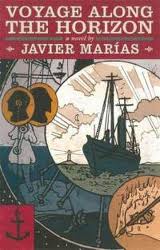
[READ: January 13, 2011] Voyage Along the Horizon
Most of Javier Marías’ books are translated and released through New Directions. But for reasons I’m unclear about, this book, Marías’ 2nd novel, was published by Believer Books (an imprint of McSweeney’s). I haven’t read any of Marías’ other novels, so I have no idea if this is similar to any of the others (there’s a Q&A at the back of the book which suggests that this is typical of his earlier novels), but it absolutely makes me want to read more by him.
What I loved about this story first off was the sense of distance we received from the main story itself. (Marías is Spanish, but this is a technique employed by Roberto Bolaño (Chilean) extensively…. Obviously, others do this as well).
The set up of the story is this: 1) An unnamed narrator has a party at his house. At this party, two individuals, Miss Bunnage and Mr Branshaw (or is it Bragshawe?–he never learns) discuss author Victor Arledge. Miss Bunnage is a scholar of Arledge and Mr Branshaw has in his house an unpublished novel that investigates the disappearance of Arledge and why he stopped writing. And so, Branshaw invites Bunnage and the narrator to his house the next day to have the novel (called Voyage Along the Horizon) read to them.
2) So, the next morning, the two go to Branshaw’s house where he does not let them see the book, preferring rather to read the novel aloud (which gives us essentially 3 levels of remove from the action of the story). That’s a long way to go before you even get to the meat of the book.
And I admit that I was a little confused by the beginning. I had to re-read Book One (all of two pages) and a bit of Book Two a second time after getting into the story just to get my bearings again. But once the reading of Voyage commences, the story is really captivating. And, once the reading begins, there is no mention of the narrator or Bunnage or Branshaw until they break for the night.
So the bulk of the book is the total novel of Voyage Along the Horizon which Branshaw believes is the best novel he’s ever read and cannot wait for it to get published. This internal novel Voyage is a fictionalized account of the last known whereabouts of Arledge. And, in Branshaw’s words, writing the novel may have “cost him both his fortune and his life, at the very least it had not been a waste of his time” (14). [Ha!]
The novel follows a doomed ship on its preposterous (if not thoroughly intriguing) expedition to send men and women of letters from Europe to Antarctica where they would stay for a few weeks and would eventually write wondrous works about the voyage and the continent.
There are a few dozen passengers on board including Arledge, a French poet Léonide Meffre (whom Arledge hates), playwrights Esmond and Clara Handl and pianist Hugh Everett Bayham. The whole trip was designed and planned by Captain Kerrigan, a friend of Arledge (which is why he agreed to go).
The opening of the novel discusses the planning and provisions for the trip. It also talks about Arledge’s disillusion with the expedition and his desire to get out of it. Until, that is, he learns that Bayham is going to be one of the passengers.
Arledge has received a letter from Handl some time ago in which Handl relates a story about Bayham. Bayham had gone missing for several days. His wife was panicked, and called on the Handls for assistance. They were just about to give up on his whereabouts when he showed up and related a lengthy story: He had been kidnapped and held captive, probably in Scotland, for several days. He was bruised and beaten but largely unharmed, and, at one point he was seduced by a fifteen year old girl. (There’s a lot more details in the letter which is totally engrossing in itself).
Arledge decides that he will absolutely go on the trip if only to find out more about this incident (and possibly even solve the mystery of who kidnapped him–no ransom was requested and Bayham was eventually released without seeing any of his captors).
And all of this setup comes before anyone has even boarded the boat yet.
The boat story is completely fascinating: murder on the high seas, a duel, a drunken captain who literally picks up a passenger and threatens to throw her overboard (the image I have is of him holding her over his head and waving her around like he will throw her).
The story also interrupts itself for a lengthy backstory about Captain Kerrigan. And Kerrigan’s story itself is totally exciting (and violent!). It ranges across various parts of the world and features murder, explosions and wife stealing.
Not bad for a 172 page book.
After the slightly rough start with the book, I was totally captivated and couldn’t put the story down. The translation, by Kristina Cordero, is fast and enjoyable. I feel like perhaps this books is overlooked in Marías’s canon, but it shouldn’t be. If you like you fiction exciting and funny, with a slightly twisted sense of setup, this is a great book that you might never have heard of.
For ease of searching I include: Leonide Meffre, Javier Marias

 I Just Read About That...
Leave a comment