 SOUNDTRACK: fIREHOSE-“Sometimes” (1988).
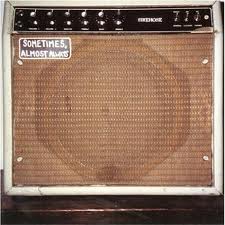 This single for the fantastic fIREHOSE song “Sometimes” is an okay EP worth tracking down if you’re a fIREHOSE fan or even if you’re not too familiar with them.
“Sometimes” is a great mix of loud guitars in the verse and soft guitar picking in the chorus. It’s wonderfully catchy and has a sort of southwestern vibe to it. It’s one of my favorite songs on the SST label.
“For the Singer of REM” is a song that’s also on if’n. I never quite knew why it was called that. There’s a lengthy story online (about twenty questions down) about how the song came about (in a nutshell, REM asked fIREHOSE to play with them and Stipe asked Watt if he wanted to record a song or two together. And so, Watt wrote this. Nothing ever came of the collaboration though). And the song is uncannily like an REM song. The verses and the cool staccato bass bridge are right on target. Although there’s a very un-.RE.M. part that separates the chorus from the bridge with heavy drums and very discordant guitars). It’s pretty neat.
The final song features what Watt calls “spielin'” This track is mostly nonsensical ranting. But there’s so many different musical sections that it’s hard to keep track. There’s a bunch of guitar jangling and then odd little bass and guitar bits. And there’s some funk and all manner of things. It’s not exactly a throwaway track because it really lets them air out their stuff. But it’s definitely a weird little piece of music.
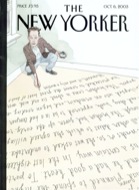
[READ: October 27, 2010] “The Listener”
Although at this point I’m no longer “testing” to see whether I liked Jonathan Franzen’s work (I’m very much a fan of his writing style and his ability to wrangle interesting stories out of thin air), this piece certainly qualifies as a test.
This article is a profile of (then) House Speaker Dennis Hastert. Now I personally don’t give a, well, anything, about Hastert. I have no interest in the man at all (especially since he is no longer even Speaker of the House) but I had probably less when he WAS Speaker, so can Franzen not only get me to care about him, but to actually want to read a fourteen page article about him?
The answer is yes.
Now this biographical sketch follows standard New Yorker biographical policy: start with an interesting incident that grabs your reader, then step back and give a brief life history of the man. Follow that up with some current information and then conclude the anecdote that you started. Most of their long biographies follow this format and it’s quite effective. It’s also easy to skip sections if you don’t care about the person’s childhood or whatever.
The opening scene of the article is certainly a great grabber: a man throws a water balloon at a firetruck in a 4th of July parade. He is swarmed by secret service and eventually arrested for aggravated battery–all because Dennis Hastert, the third in line to be President, was driving the truck.
I’m not going to go into a history of Hastert himself. What I found interesting about him (and this story) is the fascinating way he became Speaker of the House (before more experienced men like Tom Delay (who actually stepped aside to let Hastert have the job because of his own scandal at the time)). And the fact that members of both parties view him so differently. Democrats say he was a right wing brigand, Republicans think he’s very centrist, and no one seems to agree on where he’ll stand next (even the article doesn’t give a definite answer for the puzzle).
But the amazing thing now, five years later, is just how amenable Hastert was to working with the opposition. Compared to the political scene now where obstruction is the name of the game, I was actually wistful for days when the Republicans controlled the house because at least then they tried to work together, rather than acting like belligerent children who want to take the ball and go home (and it’s not even their ball!)
Anyhow, the main effect this article had on me was to make me have not sympathy but pity for politicians. The article seems like a fairly honest portrayal of a politician’s life, which just seems sad. Working hard to do whatever is popular just to keep your job. Throwing all of your ideals in the trash to get reelected. With your long suffering spouse at home hoping to simply stay out of the crossfire.
Hastert seems like a decent guy (in fact, I suppose most politicians are decent guys underneath it all, they just get caught up in the machine). He seems very personable. But then he slips back into soundbites and repetitions. And it seems so very sad.
Not necessarily recommended reading, but if you’re interested in Hastert, it’s a great portrait of the man.

 I Just Read About That...
Leave a comment