 SOUNDTRACK: KISS-KISSology: The Ultimate Kiss Collection, Vol. 2: 1978-1991 DVD (2007).
 In addition to containing Kiss Meets the Phantom, this DVD contains concert footage, music videos and some interviews. We see Peter Criss being interviewed on CNN (!) by a woman in a tank top (ah, the early days of 24 hour news) about leaving the band. Of course, this doesn’t hold a candle to the actual music video for “Shandi” one of the cheesiest of cheesy Kiss videos.
This early 80s period is one of disco, operas and unmasking, and it is generally considered their low point. I however, happen to enjoy this weird period. While I acknowledge it’s not very “good,” I enjoy it much more than their mid-80s makeup-fee period. (The often maligned The Elder has a weird kind of charm of the over-extended-effort). So, I am of course sad that it is so under-represented here. Although we do get a few clips from the long defunct show Fridays (I wish they would have shown more of the show itself, as it bought us Larry David and Michael Richards (and is mentioned in Black Flag’s “TV Party”, but that show seems to be locked away in a vault somewhere).
Disc 2 features an Australian tour during 1980, where the Aussies go crazy for them, and the band plays accordingly. There’s also the final (or one of the final) shows they did with makeup. And then the first show the did without makeup (1983). And, naturally we see the highly undramatic “unmasking” on MTV, a hilarious attempt at TV news by the ever-flappable J.J. Johnson.
The concert in 1987, (The Crazy Nights Tour) is pretty bad. This was a time when the band still played the early makeup songs, but they seemed to care so little about them, that it’s kind of embarrassing (Paul’s contempt for singing “Love Gun” in a way that even vaguely resembles the original is rather shocking). Even Ace is phoning it in at best. (Of course, Gene is a ham from the start so he’s always on).
After watching that last show I was not looking forward to the final Detroit show (The Hot in the Shade tour–a disc I liked more than most of the late 80s discs, even if the cover conceit of a sphinx with glasses is about as lame as you can get), but I was surprised at how great the band sounded. They seem energized and like they were having a lot of fun. Bruce Kulick definitely rocks hard (although I am a little disappointed that he felt compelled to change some of Ace’s signature guitar solos). And it ends the disc on a very high note.
The collection ends with the death of drummer Eric Carr. Which is certainly a downer, but seeing the shows that he played in are definitely a high point. I’m fairly certain, however, that I can’t bring myself to watch Vol. 3 of this collection.
[READ: Week of March 22, 2010] 2666 [pg 513-564]
More deaths. I am starting to get worn down by all the murders (and I can see that I am. not. alone.) and by the cavalier attitude of the police (which is either a coping mechanism for them or just a case of simply not caring). I am very much looking forward to Part 5!
However, there were some breakthroughs this week! One of the murderers was captured and found to be a member of Los Caciques [blackbird?] gang. [UPDATE: 6/27/2012: Thanks to Oscar in the comments for the update on what <<cacique>> means.]
Amidst the usual murders was a suicide. Perla Beatriz Ochoterena, a teacher, wrote that should couldn’t take it anymore. Juan de Dios Martínez talks to Elvira Campos about it, but they didn’t come to a valid explanation. Was it because of the dying girls? Would that drive anyone to kill herself?

Cacique
In October, Jesús Chimal, the member of Los Caciques, was admitted to the prison. It aroused unusual interest. Even Klaus Haas himself is curious about the excitement (and seems a little bummed that his arrest did not garner as much excitement). In total, four gang members came. They were sized up by the other prisoners, and on their eighth day, they were attacked in what was the most brutal and graphic description in the whole Part. [It struck me that this solitary description of prison rape and violence was so much more graphic and emotional than any of the women’s deaths, although I’m not sure what that “means.”] The ring leader in these murders was a prisoner by the name of Ayala. But all the other prisoners watched, as did many of the guards (some of whom took pictures). However, during the subsequent investigation, no one knew anything. Hilariously, when Haas’ lawyer showed up, she called Haas naive because he didn’t believe that people would lie about witnessing the murders.
The next month, Lalo found a dead body by going to the ravine where another body had been discovered. He went of his own design to further investigate the scene. While he was looking around he found another body that had been there for two weeks. When the teams came to uncover the body, Epifanio reamed out Lalo for his initiative and for reading all of those investigative books that he took from the station. After dressing him down Epifanio ended with, “Be careful champ, that’s the first and only rule” (527).
In December, the police were on the trail of two girls who were kidnapped (their two younger siblings were left at the side of the road). The kids could not get in touch with their working parents. In a scene that left me aghast, no one in the factory is allowed to receive personal calls for any reason, so several hours pass before the police can get out there. After much wrangling of information, the police track down the house where the girls are likely being held (neighbors had heard gunshots in the house). By the time the police arrived (and got backups, and all the proper officials) the girls were found dead. And the killers have fled. They trace back through the records of who has lived there and learn that the entire neighborhood is owned by drug traffickers.
Another scene with Juan and Elvira reveals them speaking more and more (against her better judgment). Elvira wishes she could flee to Paris with a new identity and no damned Mexicans. Juan says that he likes her the way she is. [So even though they seem to be developing a modicum of intimacy, hers is all about how much she wants out of here].
In the end of 1996, it was reported that snuff films were being made in north of Mexico. The former police chief of Mexico does not believe it. He has never seen one, and believe me he has seen everything. He would know if they were being made. The reporters tell him that no, he hasn’t seen everything. He nods and smiles and says that yes, yes he has, and there are no snuff films. He also tells them that he no longer needs bodyguards because people don’t care about killing him anymore.
Happy 1997!
Five members of the Bisontes gang were arrested, accused of several murders committed after Haas had been put in jail. Basically, it was stated that Haas organized them to kill on his behalf, that the prisons were under the control of organized crime, and once again, the name Enriquito Hernández, the Cananea drug lord came up. The papers even put quotes in Haas’ mouth.
Haas got in touch with reporter Sergio González to say that none of that was true.
Still in January, a reporter from a Buenos Aires newspaper came out to Santa Teresa on his way to LA. He reports on all of the crimes in the area. He was refused admittance to see Haas. A local reporter told him that he had a friend who could show him a snuff film.  He arranged to watch it (and was allowed to watch it with another gentleman present who seemed like at any moment he would masturbate, but who never did). But he was just laughed at when he asked if he could keep a copy. All the parties then went to El Rey del Taco (look how long it has been in business!) for food.
He then goes on to write a lengthy story about actors and actresses and snuff films in general. The term, he claims was invented by an American couple, directors named Mike and Clarissa Epstein. They hired Argentinian actors and a an Argentinian crew and set out to make a cheap film in Buenos Aires. There is extensive detail about the film: location hunting, the poorness of the script, even the reaction of the owner of the place where they were filming. (She helped stock the pantry for the actors–and one of the crew, JT, fell head over heels for her. In his parenthetical story, he pines for her greatly and practically moons over her, but he never acts on it. Then they depart and he never sees her again. Nevertheless he considers himself lucky to have even glimpsed the perfect woman, something very few people ever get to do).
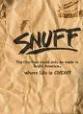 One of the actresses in the film left with an Italian revolutionary after the filming was done. Soon, rumor spread that she was killed during shooting. There is a murder in the movie and the crew slaughtered a calf to account for the blood and the body parts. But Epstein loved the publicity of the actresses dying in the movie, so he called his film Snuff. But it still did very poorly anyhow (and was clearly a fake murder in the film). [By the way, there was really a film called Snuff, made in 1976, and most of the details match up to this tale pretty well. Wikipedia gives lots of details]
Then oh God, more deaths, including an 11 year-old.
Then several Americans found a skeleton in the desert. They were cruising around on ATVs and stumbled on this body. The local police accused them of trickery or finding an animal carcass. In any event, they were kept overnight for questioning (and treated very well, according to Epifanio). In the morning, when they all traveled to the spot, the Americans were correct but there was nothing they could do about the body, which was not investigated further.
In another interesting detail, a woman’s body was found. The interesting thing is that her face had been pasted on milk cartons, but none of the policemen had seen it since none of them drink milk. None but Lalo Cura, of course.
Then we get a nice biographical sketch of the three medical examiners. These poor guys work tirelessly finding all of the causes of death of these hundreds of victims. The first is Emilio Garibay a big fat asthma sufferer. He basically has no social life and works all the time.
Juan Arredondo is the second. He got his degree from the University of Hermosillo. He is 45 and married with three kids. He also teaches at the University of Santa Teresa where he is well liked by his students.
The third is Rigoberto Frías, 32. He has been in Santa Teresa for two years. He is also a teaching assistant at the medical school. Like Garibay he has no friends or social life.
The three would often go to breakfast together at an American style coffee house and sit in silence while they awaited their food: Frías: a doughnut; Arredondo: cake and ice cream; Garibay: steak.
 This somber scene is contrasted with the police’s breakfast. A whole bunch of them go to a coffee shop called Trejos. One of the officers tells outrageously sexist jokes. We are presented with a lengthy litany of chauvinistic jokes, most of which are quite old, although a few I hadn’t heard. Some of the jokes were kind of clever, and would be funny if you were making a simple joke about dumb people. I rather enjoy the premises behind: how do you pick the three dumbest [insert own epithet here]? Answer: at random; and what do you call a neuron in a [insert own epithet here] brain? Answer: a tourist. But the rest are pretty straight up chauvinistic jokes about a woman’s places being in the kitchen, and more disturbingly as objects to be hit. What really saved this section was the conclusion. The narrator notes that
others drank, without a word, just watching the commotion, or murmuring what a load of shit, or not murmuring a thing, simply taking a mental snapshot of the crooked cops and inspectors (554).
Then comes a scene that I didn’t quite get. Lalo is waiting for the other cops. The cars drive off to a secluded spot and
news of the event was radioed from one of the cars, and soon after they got to the field some ten police cars showed up…. After half an hour all the cars drove off, leaving a cloud of yellow dust hanging in the air behind them. (554).
[I’m really confused as to what just happened there.]
Then, the “bastards” and “assholes” demanded to know Lalo’s family tree. And this section was beautifully written and quite engaging if it weren’t so sad:
- In 1865, Lalo’s (what, great- great- great- great- grandmother?) was raped by a Belgian soldier. A girl was born nine months later
- (1865) María Expósito. At 15 she was raped by a drunk in town. Nine months later:
- (1882) María Expósito Expósito was born. When she was 16, she went away for seven days. She came back bruised and beaten and nine months later:
- (1898) María Expósito. She was carefree and happy. Then, a military Colonel came looking for recruits to fight in the revolution. One recruit, filled with love for María asked her to marry her and seal the deal before he left. She refused, he raped her and nine months later:
- (1915 ) María Expósito Expósito was born.
- [In a slight twist, 4 years later, she also had a boy (1919) Rafael, with green eyes like his Belgian ancestors.]
- To the 1915, M.E.E., in 1934, a bullfighter named Celestino Arraya from Los Charros de la Muerte came to an event, partied like crazy and then left. Rafael hunted down the bullfighter. He traveled to the city, slept with a whore many times, then found Arraya, killed him and waited with eyes open while Arraya’s men killed him in turn. But even so:
- (1935) María Expósito, tall and strong, the first of this lineage to read and write was raped at 18.
- (1953) María Expósito (5 generations of ME living together). In 1976 she met two students from Mexico City. They made love many times. Against the wishes of the family, rather than naming the son Rafael, she named him Olegario and, rather than naming the his first last name Expositio (a name for orphans) she would name him Cura and thus
- (1976) Olegario Cura Expósito (our Lalo) was born.
- Shortly after, outraged by this naming his eldest María (1882) died. When he was four, the next oldest one (1898) died. And when he turned 15 Rafael’s sister (1915) died. Leaving only his mother (1953) and grandmother (1935) left.
In April, Sergio González was sent back to ST to write about the killings. He interviewed Inspector José Márquez who told him that the killings don’t follow a pattern at all as he rushed off to play in a soccer game. Sergio then went to see Haas who seemed taller and colder (if possible). He thought that even if Haas wasn’t the killer he was certainly guilty of something.
He then interviewed one of the dead girl’s mothers who informed him that she had been having nightmares about her children being kidnapped. They had started ever since she had seen Florita Almada on TV. He agrees that he will go and talk to Floirta.
Haas liked to think that human beings were perfect except that they felt pain. One night a guard came to tell him that Don Enrique Hernández wanted to see him. Haas met with  the drug lord, the warden and a lawyer. Haas refused a cup of coffee saying it kept him awake (which made everyone laugh). Hernández admitted, “I like you, gringo” and told him that someone was looking into the business with the Bisontes.
We also learn that less than a year ago a government agency called Santa Teresa’s Department of Sex Crimes (!) was created. In Mexico, the ratio of deaths male-female was 10-1, in Santa Teresa the ratio was 10-4. There are more than 2,000 victims of sex crimes a year in the city with about as many unreported, so 4,000 a year. And she, Yolando Palacio, is the only person in the entire agency. And despite all the moaning about what is happening in Santa Teresa, no one has the balls to do anything about it. Sergio asks Yolando to get some food and they head to (yes) El Rey del Taco (with him paying of course).
And after that ever so mildly happy note, the week’s reading ends with the remains of one more woman found.
COMMENTS
Little bits and pieces come to the surface and feel like something is happening, and then we get bludgeoned with more stabbings and swabbings. I’m assuming that if this part had been first, no one would ever finish the book. Since we’ve built up a set of expectations with the first three parts, I can see waiting this out, but man it is tough.
I am delighted with the way certain revelations are glinting through all the muck and blood though. The bit about Lalo’s history was great. Karl Haas continues to be enigmatic in a very intriguing way and the whole Jose/Elvira thing is wonderfully fascinating. While I don’t expect a resolution to any of these things–yes, Bolaño has beaten me down enough with unresolved Parts, that I hold no hope here–I’m actually looking forward to whatever else he’s going to say about them.
At this point the only things that will disappoint me is if we don’t see the geometry book hanging on a clothesline (since we’ve seen it in every other Part) and if we don’t somehow witness Rosa Amalfitano at the protest.
So, why do I keep reading? Because I don’t dislike the book. Because I have invested a lot of time and effort into it. And, because I like so many other Bolaño short stories (it was beneficial to have read those stories recently) that I have faith that there will be some kind of reward at the end. And it’s no fair to skip the hard part if you want a reward.
Nevertheless, I have high expectations for brilliance in Part 5. Just 67 pages to go.
For ease of searching I include: Bolano

 I Just Read About That...
«Cacique» is a word used by the spanish conquerers as a title to name the indigenous tribe leaders in central and south america.