 SOUNDTRACK: TINDERSTICKS-Donkeys 92-97 (1998).
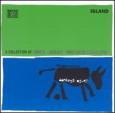 Donkeys is a collection of singles, rarities and unreleased recordings. It came out just before Simple Pleasure, and has tracks from the era of the first four discs.
With the reissue of those first four discs (and all the bonus tracks therein) and the Greatest Hits collection, it’s not really necessary to get this for these rare tracks. (I admit that I haven’t actually checked to see if all of the tracks here are now available elsewhere…there seems to be a number of different mixes and versions of songs, so I’ll let someone else do the legwork).
However, if you’re disinclined to get the reissued discs for whatever reason, this is a great collection of songs that are worth having for any Tindersticks fan. And, interestingly, it works quite well as an introduction for the newbie: it features several of the most accessible songs from the first few discs. But, for fans, the highlights include their great cover of “I’ve Been Loving You Too Long.” Also “Plus de Liaisons” a French version of “No More Affairs.” It also has the fabulous duet with Isabella Rossilini (“A Marriage Made in Heaven”) and another version of “For Those” (I’m not entirely sure how many versions of that song exist, but there’s got to be about 3 or 4.
This disc is probably easy to track down cheaply since all the tracks are available elsewhere now (although my copy came from my friend Lar and has the Euro symbol on the Used sticker to prove it). Or, maybe it’s now totally rare and out of print and is hugely expensive. Either way, it’s still a great collection of tracks.
[READ: November 5, 2009] “Too Much Happiness”
It’s a little lame to lump these two pieces together, but the Charles Foran article isn’t something I would review on its own. Nevertheless, it is a very interesting look at Alice Munro’s hometown, and the Self-Guided Tour of Points of Interest in the Town of Wingham Relating to Alice Munro sounds like a fun thing to do if you’re in Ontario. (Even if Munro herself is never actually there).
But onto Munro’s story.
I’ve only read a few stories by Alice Munro (they’ve all been reviewed here). And yet, I’ve come to think of her as writing a certain type of story. And this one does not conform to any of my notions of a Munro story.
First, it’s rather long. Second, it’s not set in Canada. And third, it’s a historical piece about a real person. There’s an author’s note at the end of the story which informs us that she learned about Sophia Kovalesky when she was looking up something else in the Encyclopedia Britannica (which I find charming in and of itself). So, all of this seems to be something of a departure for her (at least from what I’ve read).
I admit right off the bat that I have a hard time with Russian stories (so, not too much Dostoevsky for me). I have difficulty keeping the names and locations straight (despite my nationality). And given that this is a historical piece (set in and around 1891) and there’s a lot of historical Russian information, I struggled with portions of this story.
Although I think what caused the biggest difficulty was that the story is designed as a reflective journey. Sophia reflects back on different times of her life: her sister and questionable husband; her own first marriage (a political marriage designed to allow her to escape from her life); and her mentor and friend, Weierstras.
Sophia is a mathematician at a time when women were not mathematicians. As the story opens she is awarded the Bordin Prize and has become something of a celebrity in math circles. But she is still not offered a job. She is also spending a lot of her time with Maksim Kovalevsky.
Despite having the same last name, they are not related (Sophia’s first marriage was to a distant cousin of Maksim’s). Maksim is an academic but because he is a Liberal, he cannot teach in Russia. (This is some of the historical Russian politics that I don’t know, so a lot of this infighting was lost on me). Their friendship blossoms into more than friendship until she wins the Prize. Suddenly, her star shines more brightly than his and he pulls away from her.
After several months apart, Sophia tries to rekindle their relationship, and it works. He pledges to marry her (although she is not entire sure of his sincerity or even his motives). And since they are both in their forties with little else in the way of romantic prospects, well, why not.
The remainder of the story shows Sophia taking a trip to give a lecture. The trip entails trains, ferries and more trains. It also involves trudging through snow and carrying her own bags (because of a currency mix up).
On the trip, Sophia reflects back on her life, and the many events that led her to this stage. But she is also clearly becoming feverish from the travel. So, as the story moves along, the dream sequences get a bit more hazy, and it’s not always clear when the action is happening. Because the main story is also in the past tense, there are times when I had to really work on which storyline she was presently in.
After reflecting on the story, the timeline did make sense; it all seems to fall into place nicely, but during the story I was a bit confused.
And confusion is something I don’t expect from a Munro story.
Knowing that this is a piece of historical fiction changes things for me somewhat, even if I’d never head of Sophia Kovalevsky before. Hers was a fascinating life, and I appreciate Munro for introducing her to me. I feel like this might have worked better as an even longer story, as a lot of details seemed condensed. But, Munro acknowledges that she didn’t intend to write Sophia’s history, just a portion of it. And at that, she succeeds.
She also notes a great book about Sophia’s life (where she began her research): Little Sparrow: A Portrait of Sophia Kovalesky by Don H. Kennedy.
[READ: July 19, 2009] “Alice in Borderland”
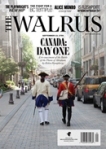 This article provides some insight into Munro’s life, and the kind of people and places that she grew up with (many of whom appear (somewhat disguised) in her stories). And, since most of her stories seem to be situated in Jubilee (a fictionalized version of the town of Wingham) in Huron County, Ontario, it’s a fascinating insight into her work.
Munro (born in 1931) grew up outside of Wingham, but after going to college, she moved to the West Coast and did not return to Ontario until the 1970s.
Foran’s article focuses on The Self-Guided Tour of Points of Interest in the Town of Wingham Relating to Alice Munro, a brochure available at the North Huron Museuem. It includes a stop at the Alice Munro Literary Garden (where Munro herself has only visited once). But mostly it reveals the locations and scenery where her stories are set.
While walking around the town, Foran talks with many residents (to see if he can recognize anyone from the stories). Munro’s stories offended sensibilities when they were first published (she revealed Secrets); however, it seems like now people are rather fond of her and the modicum of celebrity she has given the region.
Foran also has a (somewhat rare for the publicity-shy Munro) lunch interview with her. And this little insight into her personality makes the article completely rewarding for any Munro fan.
It’s available here.

 I Just Read About That...
Leave a comment