 SOUNDTRACK: THE TREWS-No Time for Later (2008).
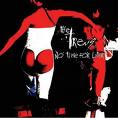 I was surprised by this disc. The cover is mildly shocking, but more just tasteless (and one that I won’t leave lying around), but it’s mostly shocking because it is so inappropriate for the music contained within. The music is such basic rock and roll–the kind that I didn’t think anyone made anymore. It’s almost retro in its boogie woogie Black Crows style of rock.
I had gotten their first disc, House of Ill Fame when it came out. That disc is also a simple, rocking disc, but it has rough elements that keep the listener interested. But No Time is so much more polished it practically shines with smoothness. It’s funny how a little bit of smoothing can make such a difference.
The 21st century music listener is possibly somewhat aghast at this disc because it is so un-raw, un-edgy, so basic. And yet for all of its weird retro rock stylings, releasing a record like this in 2009 is rather original. And I realize that if I had heard this twenty years ago I would have thought it was a great rock record. So I put that listening cap on and found out that yes, I could rock out to this disc.
In fact, I feel like after track 4 the disc really takes off: “Paranoid Freak” is a great rocking tune, and hearkens back to the raw writing style of their first disc (even though the song itself is not raw sounding at all). “I Can’t Stop Laughing” has a great chorus, one built for arenas. The only really questionable song is their “political” one, “Gun Control.” Sure, I agree with the sentiment, but such a pointedly simplistic and, frankly, preachy song isn’t really good for anyone.
It’s become something of a guilty pleasure because I can’t think of a record less cool than this one. There’s simply nothing here for an indie rocker to latch on to. And yet I still like it.
But the whole time it’s so hard to imagine that this disc came out in 2009.
[READ: September 27, 2009] “Crash of ’69”
This was an early piece by DFW and here’s the write-up from The Howling Fantods (appreciation just assumed at this point) which tells a pretty interesting origin for this story.
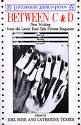
“Crash of ’69”. Between C & D, Winter 1989. [NOTES: Between C & D was an experimental literary magazine literally printed on circa 1989 dot matrix printer-paper and sold in a plastic bag. Finding a copy of “Crash of ’69” (in any shape) took work and many thanks go out to those who tracked it down. That being said, it was kind of a mess. A lovingly restored copy is available here.]
Turns out that there is a book of the Between C & D stories. I can’t find out very much about it, but I’m going to try and interlibrary loan it and see what else I can discover. If I’m reading what little information I have correctly, it appears that Kathy Acker & DFW may be published in the same book (which is of course funny given his review of her work here).
But on to this short story.
As with much of his short fiction, “Crash of ’69” comes across as rather experimental. Each paragraph or so is headed by a character’s name (there are three in total, I think, although the female character’s description in the heading changes each time she speaks.
The main character is Karrier. He has the distinction of always being wrong–a trait he shared with his father. Both men have been used quite successfully on Wall Street for their unfailing ability to be wrong (which is often just as good as being right if the correct question is asked).
There isn’t a plot per se about this character except that his boss is concerned that his gift for being wrong is slipping somewhat.
It’s an interesting story-lette in an of itself. But the story hinges on the woman. And it gives the story a new angle of strangeness. The woman is described variously but ultimately as “Miss M. Lynch, Daughter of the 1st Chairman of the Federal Reserve Bank of the United States, October ’69.” And it is her story that really propels what there is of a plot here. She is planning to get something out of Karrier to assist her father. But even that is rather nebulous.
M. & Karrier’s paths cross, but even that scene is written as a bizarre/noir situation.
I can’t say I know a lot about DFW’s early works, but it seems like he is trying to do some oddly experimental work here. And experiments are tough to talk about because if you don’t know what the experiment was, you don’t know if he succeeded. As a apiece of its own I thought it was a little underwhelming, although again, some of the scenes are evocative and the premise of the guy being always wrong was interesting. Although you couldn’t really go much further in the story with that character.
M. Lynch’s character (and character headings) were also fascinating. But this feels like a case where too much was left out of the story.
I also accept that there is something relevant to it being set in 1969 that I simply don’t know anything about. That might shed some light on just what’s happening here. Without doing research, I assume that Billy G. is Billy Graham and Allen G. is Allen Ginsberg. Also, is there some significance to being the Fed Chair in 1969? I don’t know. I’m not willing to investigate all that much for this story.

 I Just Read About That...
Leave a comment