 SOUNDTRACK–THE REPLACEMENTS–All Shook Down (1990).
 And here we come to the end of the recorded history of the Replacements. 7 albums (and an EP). 4 and a half hours of recorded music. And a steady maturation from drunken punks to elder statesmen. Or really statesman (Paul Westerberg at the ripe old age of 31!). All of the reviews state that this was originally designed as a Westerberg solo album, and that the band barely played together on it at all. And it shows.
To me, this album just isn’t very good. It’s not that the songs are bad…I ‘ll always admit that Westerberg is a great songwriter. I’m just not inspired by them. The single, “Merry Go Round” is the most (there’s that word again) mature sounding rock tracks that Westerberg has written. And “Nobody” is a decent acoustic type rocker (although the drums are kind of boring). “Bent All Out of Shape” shows promise but never lives up to it.
“Sadly Beautiful” is another of Westerberg’s solid ballads. But it doesn’t stand out because the rest of the album isn’t that radically different. “Someone Take the Wheel” and “When It Began” are decent rockers, but the rest of the album is just sort of…there (except for the awful duet with Johnette Napolitano (whom I used to like but who i just find annoying all these years later).
Westerberg went on to do about a half dozen solo albums but I haven’t heard any of them.
There’s nothing wrong with a songwriter maturing, especially if you get to mature along with him or her. It’s just such a surprise to see it happen so quickly.
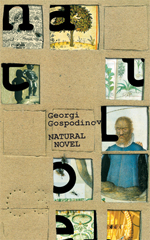
[READ: June 15, 2009] Natural Novel
My coworker and I were experimenting with our library’s catalog. We started searching for books in specific languages. We noticed that Bulgarian was one of the languages, and were surprised that our branch had anything in Bulgarian. It turned out that there was one book that was originally written in Bulgarian but which had been translated to English. It was this book. It sounded bizarre and fascinating. And it was only 136 pages. How could I pass it up? And what would it be about?
Well, that’s hard to answer.
The premise of a “natural novel” is that it is meant to be a man’s attempt to deal with the dissolution of his marriage. He starts to talk about the divorce several times, but he can’t really come to terms with it, and so, rather, he gets involved with other things.
One chapter is devoted to the history (and importance in history) of toilets. Another chapter deals with an attempt to write a novel consisting only of verbs. And flies. Lots of flies.
But let’s back up. The book begins as a story by Georgi Gospodinov. The first two chapters talk about his impending divorce from his wife Emma. He has just learned that she is pregnant. But he also knows they haven’t had sex for months.
The third chapter is the editor’s note (yes, you can tell something is up when the editor’s note shows up three chapters into the book). The editor explains that he is a newspaper publisher, and he received this anonymous manuscript in the mail. He decided to publish excerpts in the paper in hopes that the author would come forward. Rather, the author’s wife (or ex-wife) shows up and says that it is her story. Her husband is Georgi Gospodinov. The editor. startled, reveals that his name is also Georgi Gospodinov.
Okay.
Georgi, the editor, decides to publish Georgi, the writer’s, book. And we learn that Georgi was obsessed with movies, pop culture, toilets and a giant wicker chair. He had spent half his paycheck on this giant chair, which is simply magnificent. This chair goes with him through his various adventures (fictional or otherwise).
But onto toilets. He and his friends are avoiding the topic of his wife, so the discussion naturally turns to toilets, and the wonderful graffiti that is written there. In fact, they wonder why, since toilets are such an essential part of our lives, how could they be left out of all popular culture? Thank you, then Quentin Tarantino for putting one in Pulp Fiction and Reservoir Dogs!
And speaking of feces, we must talk about the fly. It can invade our dreams (the buzzing is usually masqueraded as a mechanical sound). It has multiple eyes, refracting pictures into many different angles. And, in a later chapter, he has a rather detailed conversation with F., the fly in his house.
And from insects we move to plant. As Gospodinov is a naturalist, there is a lot of talk of plants. Georgi tells a story of an old man who moves to a village where he starts a large garden. He plans his garden as if it were a clock. Certain flowers bloom at specific time of the day, and he would arrange them accordingly.
He stays out of site from most of the village, making an occasional trip to the post office, but little else. The villagers demand to know what this strange man is doing. The post officer tells them that he sends a postcard to two different women every month. And all it says is that he is waiting for them. He also sends a letter to the UN. He eventually dies, alone. And all that is left is his handwritten book, Notes of a Naturalist.
This book is the next chapter, and it is the longest chapter in the novel. The Naturalist, sitting in his wicker chair, growing his garden, believes he has found the secret of words, and how words can cause so much damage in the world. If only someone would listen to him. Why doesn’t the U.N. respond?
What if, rather than the naturalist, Geoegi should write about a tramp. He would have to live as a tramp to understand exactly the life of a tramp. He would grow a beard, he would live on the streets. He would stop going back to his house. He runs into his old friends. They don’t recognize him in his current state. He talks to them in language they understand. They like him and invite him to share dinner with them, even if he does look like a bum.
How will it end?
So, as you can see, this was a pretty weird book. If you like your books postmodern and essentially plotless, this was a good one. If it had been very long I’m not sure I would have read all the way through to the end. But it was short and the chapters were almost all two or three pages long. I’m glad I read it. Although I’m not entirely sure what it was all about.
I just clicked on this link which contains multiple reviews of the book. And I feel compelled to add a postscript in reply. They observe that the book is smart and fun. And I agree. Even though the book was without a real plot, the individual chapters were intriguing, and followed through on the idea presented. And, with the pop culture references (and toilet humor), it was entertaining.
Another reviewer mentions the honest appraisal of life in post-Communist Bulgaria. And yes, I guess this is a pretty honest picture of it (for what I know of post-Communist Bulgaria, anyway). So, for that, it is a good book.
Just don’t expect a happy ending. Or an ending at all, really.

 I Just Read About That...
Leave a comment