 SOUNDTRACK: THE SMITHS-The Queen Is Dead (1986).
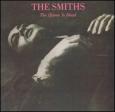 Years ago, when I was a young metal head, my friend Garry expanded my musical palette by introducing me to a lot of college rock (or whatever it was called back then). The album that had the most impact on me back then was this one, The Queen Is Dead.
Unlike most listeners and fans of The Smiths, I was first drawn to them because I found this album to be very funny. Now, true, Morrissey is a funny, literate writer, but the general consensus is that the Smiths are mopey, sad, depressive, you know, goth. I guess I was more interested in the words than the music at the time?
And of course, it was “Bigmouth Strikes Again” that really sold the deal for me, as “Now I know how Joan of Arc felt…when the flames rose to her Roman nose and her Walkman started to melt,” is pretty twisted and funny. [To the sticklers: all these lyrics are paraphrased somewhat]. And “Vicar in a Tutu” is weird and wonderful, with a rollicking skiffle beat that propels the song at a mighty pace as the vicar “comes sliding down the banister.”
Even “There is Light that Never Goes Out” is a depressing sing about dying together, and yet the phrasing is pretty darn funny: “If a double-decker bus crashes into us, to die by your side is such a heavenly way to die.” And lest we forget the peculiar disc ender, “Some Girls are Bigger Than Others.” Certainly a true statement regardless of whatever he’s talking about.
My introduction to this disc was in the days of cassettes, and we listened to side 2 a lot, but side 1 is also fantastic. The title track is a great opener: fabulous melody, rocking drums and a great verse about Morrissey breaking into the palace and being told by the Queen that he cannot sing. Next, “Frankly Mr Shankly” is a 2 minute poppy song, also twisted, with lines about “making Christmas cards with the mentally ill.” And “Cemetery Gates” is a twisted little fun piece which namechecks Keats, Yates and Oscar Wilde.
And lest we forget the rest of the band, the music on this disc is varied and wonderful. The music of “The Queen is Dead” is funky bass, smashing drums and the gorgeous guitars of Johnny Marr. Since The Smiths broke up, Morrissey has been in the spotlight far more than Johnny Marr. Morrissey’s solo career is flying pretty well these days, while Marr has been a sideman in a lot of different bands (currently Modest Mouse).
Johnny Marr’s guitar playing has always been a fascinating mix of textures and effects. No one would say that he was a show offy guitarist–I don’t think there are any solos in his career at all–but the sounds he creates are weird and more than appropriate to the songs. I’ve been playing guitar for years and I’m not even sure how he makes some of those sounds.
The Smiths were a great band, and this is one of my favorite albums.
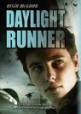
[READ: April 10, 2009] Daylight Runner
My friends Louise and Ailish told me that they met this author in their hiking group. I imagine all kinds of interesting Irish folks climbing the coastline of Ireland talking literature…. Anyhow, when they told me about this author I pictured a fledgling writer who was trying to get his book published…and they read it and thought it was really good. I was intrigued, and Louise said she’d send me a copy. And she did.
What I didn’t realize is that she was able to order it from Amazon, and that McGann is a rather prolific author in Ireland. He is primarily known for his kids and YA books. So they know a widely respected and published author. That is almost as cool as my friend Christopher being taught by Roddy Doyle before he wrote The Commitments.
 Oh, and as for the weird title listing. Faithful readers know that one of my pet peeves is when publishers release a lame cover for the American edition of a book. Many is the example I have shown. Well, this book has an even more egregious alteration: the title of the book has been changed from the Irish edition to the American one. And I’m not talking about the switching of one word (Harry Potter and the Philosopher’s Stone becomes Harry Potter and the Sorcerer’s Stone because apparently Americans would be put off by this unknown author and her high-falutin philosophers…and they must have been right! Look how well the American book did). No, in this case, the book title is changed from the rather cool Small Minded Giants to the utterly lame and not in any way applicable to the book Daylight Runner. When we get to the story you will see that aside from the fact that the main character is on the run, “daylight runner” couldn’t be further from anything to do with the story. Gah, marketers.
So, what’s the story about. Well, Sol Wheat is an amateur boxer in high school. His classmates sort of ignore him as he’s rather focused on his training. Even kids he used to be friendly with, like Cleo, who is the lead singer and guitarist for a popular punk band in school, has little contact with him.
Then, Sol’s father, Gregor, doesn’t return home from work for three days straight. This is something that he has never done, especially since Sol’s mom and sister were killed in an accident a few years past. One day, Sol comes home from school to find his flat ransacked, something which Sheol assumes has to do with his Gregor’s gambling and the reason why he hasn’t been home. Sol is apprehended by the police who say that Gregor is wanted for murder. Sol is dragged down to the station where he is harshly interrogated until his teacher Ana shows up to drag him away. Since he has no family to stay with, and has the police and unnamed thugs after him, Ana invites Sol to stay with her and her roommates for the time being.
Sol spends much of the book trying to figure out who he can trust. Can he really trust Ana? What about Cleo, who becomes intricately entwined in Sol’s story when her apartment block becomes a target of the Clockworkers? And what about Maslow, the man his father sent to protect him while he went into hiding? If he’s such a good guy (and he has proven himself with Sol many times) how can he be so flippant about killing someone?
And what about the stability of the dome? Can people continue to live with the Machine generating all of their power, or are the Dark Day Fatalists correct that they are living a fool’s life inside a domed city with no contact from the outside world.
Oh, didn’t I mention that? Yeah, this story is set in the future, after the next ice age when the majority of the world have been frozen, and average temperatures outside hover around -70 degrees Celcius. The city of Ash Harbor was built as the Ice Age was coming. It was the only city built as a dome, destined to withstand the freezing temperatures. And as they lost contact with the other civilizations around the world, the inhabitants of Ash Harbor began to believe that they are the only people left alive, and that their creaky old system, built so many hundreds of years ago really is a creaky old system.
The thing is though that most people don’t realize it, they go about their daily lives powering the machine that generates life in the city. Very few people question anything that happens in Ash Harbor. And that included Sol until his father disappeared, and there was a disastrous crash of a transport crane while his class looked on in astonishment.
So Small Minded Giants turns out to be a pretty cool good cop/bad cop/who-can-you-trust mystery set in a dystrophy sci-fi realm. And there was a lot to this story that I enjoyed very much. The pacing was excellent, the characters were cool, with interesting quirks, and the conceit of an entire domed city complete with a machine running it (and detailed explanation of how it worked) was very cool. He also created new materials (“denceramic” whatever that is), makes up the bulk of the city.
Some of the things I found tough going about the book were these entirely made up things: what the hell is denceramic, and what are all these odd technological things that are going on around the city. Normally I don’t mind when the exposition is left out, but if you’re inventing a new world, I like to have my hand held a little bit. It felt more or less like the second book in a series, and all of the exposition had been in the first book. Really, it’s not that big a deal, but given how detailed he was about so many things (at times too detailed, and at other times repetitively detailed) it was weird that I felt so in the dark about so many things.
The other thing that I was surprised about, and which turned me off a little, was just how violent the story was. There’s an awful lot of shooting and bone breaking and relatively explicit descriptions of such things. Now, I realize that that’s part of the story and it really adds a lot to the danger level. I was just surprised (especially given the friends who recommended it).
Online reviewers say that this book is very different from his other books (most of them suggested that his young readers should stay away from it). So, I’m curious to see what else Oisín has written. If anything else is available here in the US, (original name or not) I’d be interested in checking them out. And someday when our family finally gets over to Irleand, maybe we’ll go walkabout with the man himself.
Oh, and the book has a character with a great Irish name: Faisal.
For ease of searching I include this spelling: Oisin

 I Just Read About That...
Leave a comment