 SOUNDTRACK: There Will Be Blood Motion Picture Soundtrack (2007).
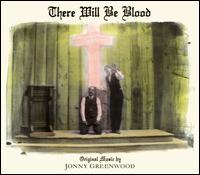 This soundtrack was composed by Jonny Greenwood of Radiohead. I have not yet seen the movie so I can’t speak about its use in the film (which I assume is very good given all the raves I’ve read about it).
Anyone expecting something Radioheadesque will be disappointed in this soundtrack. There’s nothing electronic or weird (well, not too weird), or anything resembling any of the work he’s done with Radiohead. Rather, the entire work is “classical”: strings abound! Now, I like classical music, and I have some favorite composers. I also like some younger/avant garde composers. So, the fact that this release is on Nonesuch Records, home of Kronos Quartet (one of my favorite classical artists) among other similarly minded artists should tell you something.
The first two tracks are the most gripping. I assume that “Open Spaces” is the “theme” of the movie, and the strings are really arresting. It certainly sets the tone for the movie and the music within. While “Future Markets” presents a very tense, fast score. Another interesting track is “Proven Lands” which is primarily percussion with some pizzicato strings thrown in as well. The rest of the disc consists of very moody, very scene-setting pieces.
By itself the music is rather tense, and you certainly don’t expect a happy ending by the time “Propectors Quartet” finishes up the disc. It sets a dark mood. As Sarah asked when she walked into the room, “What’s this depressing music?” That sums it up right there. I’m looking forward to seeing how it’s used in the movie.
[READ: November 13, 2008] On Chesil Beach
My friend Ailish encouraged me to read an Ian McEwan book several years ago called Enduring Love. I really enjoyed it. And they have now made his book Atonement into a film. But I hadn’t read any other books by him until now. This book was on our donations shelf at the library, so I grabbed it.
It’s a tiny book…200 pages and the dimensions of a paperback, but it seems even smaller. I was able to polish it off in a couple of days.
This is the kind of story in which, as they say, nothing happens. The basic plot is that in 1960s England, Florence and Edward are two virgins who have just gotten married. He is thrilled at the idea of having sex; she is literally repulsed by the idea (the manual that she read contained words like “engorged” and “penetrated” and she has yet to get over it).
The first part of the story shows the happy couple as their honeymoon begins. They are full of joy and nervousness as they eat their uninspired British beach-front cuisine. The next section contains a flashback of Edward’s family (the book’s story is really his, as we learn about his family, as well as her family through Edward’s eyes). Edward’s mother is aloof and confused, with a tragic backstory that Edward learns the details about much later in his life. Edward’s father works very hard to keep the house orderly, but really he can’t keep up with Edward and his two younger sisters. Edward is excited to move to London, go to university and get on with his life.
The story then flashes back to how Edward and Florence met (at a nuclear disarmament rally) and how much chance was involved in their meeting: the stars aligning to bring these two lovers together. The tenderness of their earlier relationship is really nice. They clearly have a lot of affection for each other.
Florence’s family is a world apart from his own: two successful professionals, they engage in upper class pursuits: tennis, politics, classical music. Edward is introduced to food with flavor! The fact that her home life represents a vastly superior escape from his own is not lost on Edward, but he is not simply interested in her for her status.
Subtle revelations arise showing that they have some differences of opinion but which they are timid about voicing: for instance, she plays lead violin in a classical quartet that she founded; he doesn’t care for classical. He has really been getting into rock and jazz, but she doesn’t understand, if the beats are all 4/4 and they have a rhythm guitar, why rock bands need a drummer. She is absolutely terrified of the thought of him naked; he takes every twitch and spasm she makes as being signs of her own passion.
The central moment of the book comes in their hilarious attempt to consummate their marriage. And yet, despite the comic nature for us, something very serious is broken between them.
The denouement of the story is one of sadness, but not necessarily regret. There are triumphs and minor tragedies. We don’t learn a lot about Florence’s future life, (although she is clearly successful in her pursuits) but we do follow Edward’s life through to adulthood. The rest of his life shows some successes in business and yes, in sex (the swinging 60s were like being released from a prison), yet he never lets go of his feelings (both pro and con) for Florence.
While this review gives away some of the plot (since only about 3 things happen) I tried to avoid some of the really big items. Nevertheless, the story is not about plot, it is about exploring two characters, and at that it is extremely successsful. Even a brief story like this could come across as very dull if the characters are not developed well, or if the writer can’t handle this sort of “nothing happening” style of writing. But McEwan is quite a master of descriptive passages. He instills his characters with great depth, and surprising backgrounds. Despite the story’s overall tragic arc, and the opinions you may have of her fear of sex and of his temper, you feel a great deal of warmth and affection for these characters.

 I Just Read About That...
Leave a comment