 SOUNDTRACK: MICRODISNEY-Big Sleeping House: A Collection of Microdisney’s Finest Moments (1995).
 Microdisney was founded by Cathal Coughlan and Sean O’Hagan. These two then went on to form respectively, the Fatima Mansions and the High Llamas (and O’Hagan worked with Stereolab as well). If you’ve ever heard Fatima Mansions and High Llamas, you will not understand how these two ever worked together.
If you haven’t heard them, then let me explain. High Llamas play beautiful, multi-layered, somewhat orchestral extended pieces. Their CDs, including Hawaii  and Gideon Gaye
  are really beautiful. Meanwhile, the Fatima Mansions play angry noisy rock, and perpetuate the slogan “Keep Music Evil.” Viva Dead Ponies
  is certainly recommended, if you can find it! Clearly, these men started in one place together and drifted apart. However, you can see the kernels of these future bands in Microdisney.
Microdisney was a small Irish band (clearly flying under the radar of Disney, as they never seemed to get sued because of their name). They wrote short, pretty songs that often had bitter, funny lyrics. Cathal Coughlan has a great crooning voice, and a striking speaking voice (when he speaks, rather than singing, during the songs). It gets taken to pretty far extremes in the Fatima Mansions, but in Microdisney, for the most part he sings quite beautifully. And, when you put his voice with O’Hagan’s music, the tunes are catchy, the melodies are infectious, and you find yourself singing along. It’s only when you start to listen to the words that you realize how off center Cathal is.
Like the amusing lyrics of “Town to Town”: “She’s nervous and her; Best friend is waiting, She’s trying to pronounce my name,” that catch you off guard. Then, when you start singing the super catchy chorus “When the daily parade of the troubles you made gets you down, Just consider the fate of the wide open space from town to town,” you get lulled in. Until the verse: “Get Olso, get Glasgow. Hit Bonn and hit Bordeaux, Fry Dresden, miss Dublin; Why don’t you call me?I’ve got nobody.” Then you realize what you’re up against.
This is a greatest hits collection of a sort. They released five or so albums that are pretty much unavailable here (even the greatest hits may not be available). But they’re worth checking out nonetheless. And remember: Keep Music Evil!
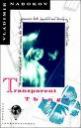
[READ: February 6, 2008] Transparent Things.
Everyone has a thing to say about Lolita, whether they’ve read it or not. I read Lolita about ten years ago and I was surprised at how good it was. (I’d been led to believe that it was basically just porn–which it isn’t–or that you couldn’t or shouldn’t sympathize with a pedophile–but you might.) A coworker at the time told me to check out Nabokov’s Pale Fire, which I did, and which I really really liked. It’s a weird book, full of literary fun, and lots of quirks. A good summary is available here.
After reading these two books, I decided that Nabokov was someone I should read more, if not all of. So, I had bought a few other books by him, and then promptly didn’t read them. I found Transparent Things in my pile of books to read and decided it was time.
The first thing I noticed was that it was really short…only 100 pages. The second thing I noticed was that the book was not as easy to read or to follow as most of the contemporary fiction that I read these days. I’ve said before that I used to be a snooty reader, but as I get older and have less free time, I’ve gotten lazy. And this book was a reminder of how lazy I’ve gotten.
Or, it was just a really difficult book. For 100 pages, in which comparatively little happens, there’s a lot going on. Hugh Person, the protagonist, goes to Switzerland 4 times over the course of his life. The first time is when he is a young lad, and he goes with his father. On a later visit, he meets his future wife Amande. They return to New York and have a brief but unhappy marriage (much is made through the book of poor Person’s sexual inadequacies). A plot point happens now which I won’t reveal, as it’s the only plot point, really, in the story. Eight years later, he returns to Switzerland to revisit the sites and activities of his previous visit.
He discovers that you really can’t relive your life as nothing is the same as the last time he was there: he can’t get the same room he was in, a second hotel has burnt down, and there has been much construction changing everything that he thought he remembered about his previous visit.
And really that’s all that happens. But, as with all great literature, something is going on behind the scenes. What it is exactly, is hard to say. And, I’m happy to report that others seem to feel the same way about this book. Look up other reviews and you’ll see lots of puzzlement.
So, bottom line is, don’t expect to be blown away by this if it’s your first Nabokov; however, since it’s a short book, it’s a good way to get a sense for Nabokov’s style.

 I Just Read About That...
Leave a comment