 SOUNDTRACK: NADA SURF-Let Go (2002) & The Weight is a Gift (2005).
 Let Go. Something happened between Nada Surf’s 2nd and third album, I don’t know what, exactly, but they really made some great material with these two albums. Let Go introduces a new jangly guitar style that makes the band softer and catchier, but which really accentuates the singer’s voice and melodies. Usually, when a band “matures” like this, the results are never good. But in this case, the mellower sound and slower songs really bring out the quality of the work. The first five tracks really shine, with “Fruit Fly” and “Blonde on Blonde” really standing out. The lyrics of “Fruit Fly” seems so simple and yet in context, and with the great melody, they work wonders.
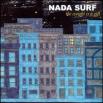 The Weight is a Gift. This record continues the path set out by Let Go, and overall The Weight is a Gift is a consistently great record. The songs are all well paced and well placed on the record. “Blankest Year” with the great chorus, “Oh fuck, yeah, I’m gonna have a party,” runs the more rocking end of the spectrum, while the title track is a more slow paced-yet much more lush- sounding song. Simply a great album. I rank this very highly. And this is the last we’ve heard of them for two years, now.
[READ: mid July, 2007] “Save Us”, “This Old House” & “If I Vanished”
I don’t always read the short stories in the New Yorker. Usually it depends on 1) if I have the time 2) if I like the author or 3) if the opening paragraph really grabs me. Recently, I had three stories that met the criteria:
Shalom Auslander: “Save Us” (listed as a Personal History) July 2, 2007.
David Sedaris: “This Old House” July 9-16, 2007.
Stuart Dybek: “If I Vanished” July 9-16, 2007.
“Save Us.” Shalom Auslander’s story is a funny account about how his father built the ark for his synagogue in Monsey, New York. I went to school in Ramsey, NJ and had friends not too far from Monsey, so that local feel added some nice dimensions to it. The story is particularly funny because his father is a foul-mouthed heathen (according to the rabbis at his synagogue). The story is full of cursing and school bullies and fatherly bullies and general mayhem. And it is quite funny.
“This Old House.” As usual, Sedaris’ essay is very funny. He loves to take a scene and extrapolate the most absurd detail and then run with it. In this case, he revisits his love of “antiques” or more appropriately “junk.” He reminisces about the “good old days,” to which his father comments, “Try getting up at 5 A.M. to sell newspapers on the snow-covered streets. That’s what I did and it stunk to high heaven.” The story morphs into his stay in Chapel Hill, NC in a boarding house full of antiques and bizarre characters. As with all Sedaris, it is wry and very funny. My only question is that this incident happened quite a long time ago in his life. How odd that he waited until now to write about it! Most of his current essays are about his life now in France. I wonder what let this story sit on the shelf of his mind for so long.
“If I Vanished.” This story is not funny. Well, it’s a little funny, but it’s not a comedy. It revolves around a couple who had trouble communicating and, naturally, break up. She asks the title question, “What if I were to vanish?” This open-ended question leads to a huge fight. She claims that the romantic lead (Kevin Costner) in the movie Open Range is asked this question and answers beautifully. The narrator spends the bulk of the story reflecting on, and then ultimately watching Open Range. His observations about Open Range are hilarious. I can’t say much more without giving anything away. But I really enjoyed the story, and its available here if you want to check it out for yourself.

 I Just Read About That...
Leave a comment