 SOUNDTRACK: GUSTER-Parachute (1995) & Goldfly (1997).
I have seen Guster twice live, and since then I have become a huge fan of the band. The first time, they opened for Tori Amos, and I didn’t pay them too much attention, but I liked what I heard (this would have been for their Goldfly album). The second time, they opened for Ben Folds, and I was really impressed. I rushed out and got a copy of their record and now I listen to them all the time. They have such a great pop sense, without being treacly; in fact, at times they can be quite dark–and yet so catchy!
 Parachute: A really great debut, that, in retrospect, sounds almost nothing like the Guster we know and love. This sounds a bit more like the Indigo Boys. Solid harmonies over a very acoustic sounding record. Over the years, Guster have written fantastic melodies and lyrics. And this album is no exception. It’s really the production that sounds so unusual here. Very sparse and almost cool, as opposed to the warmth that they bring to their later albums. The songs are top notch, though.
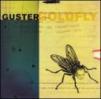 Goldfly: “Airport Song” is such a fantastic single, and such a great precursor of what’s to come from Guster, that it tends to overshadow the rest of the album. Goldfly starts Guster down the road of what we’ve come to expect from them: catchy melodies, dark lyrics and fantastic harmonies. The later albums are even better, with nearly all of the songs being as catchy as “Airport Song.”
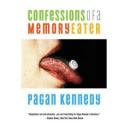
[READ: Fall 2006] Confessions of a Memory Eater.
I met Pagan Kennedy in an odd way. I had read some of her early works, in particular the book, Zine,  which explicated her life as the author the zine (for you youngsters, it was like a blog, only on paper) Pagan’s Head, and liked it very much. Then when I was going to grad school at Boston College, Pagan was teaching freshman writing. So, I just popped into her office. How weird! I told her I liked her stuff and she said, “thanks,” and really that was about it. It must be weird to go from helping freshman correct their grammar to dealing with your fanbase.
This particular book of Kennedy’s departs quite a bit from what I’m used to from her, and this new style suits her very well. Her previous works, especially The Exes,  were a lighter affair, dealing in a slice of life type situation about a band breaking up. She revels in pop culture references which makes her work either of a time or very dated depending on your tastes. However, in Memory Eater, she eschews much of the stylings of her previous work and goes for what can only be described as a science fiction feel.
The premise of Memory Eaters is that Win Duncan, a promising college careerist and failing husband, is contacted by one of his old friends, Litminov. Litminov is the guy that you hung out with years ago who always got you into trouble. Well, this time he is back, making grand claims and peculiar promises. The secrecy of Litminov takes up an enormous part of the book, which is excellent because Litminov promises to give Win, and eventually the world, a drug that helps you to relive your past, but only the moments that you really enjoyed. Win is mistrustful not only of Litminov himself but of his specious claims.
Obviously, Win tries the drug. And he relives some of the favorites memories of his life. He slowly begins to lose himself in these memories. As the book progresses, we have the most extensive use of unreliable narrator I have read in recent times. This is especially true as Win starts to leave himself notes signed to himself but including his chronolgical age at the time of his re-lived memory, such as Win-6 or Win-41. The rest of Win’s life basically disappears as he tries to grapple with issues from his past, while barely living in the present.
Kennedy reins in the fanciful nature of her story with well-grounded, if not essentially dull characters (at the outset). Win believes that he can jump start his failing marriage if he and his wife can relive their happy moments, but she has already moved on to newer happier ones. The details of this life are familiar to anyone who has been in a relationship that is ending.
And speaking of details, Kennedy really goes all out with scenes in which details make all the difference. For instance, when Win and Litminov go into a shared memory, and each one remembers details differently, it is the stronger personality whose memories prevail, and yet what of the weaker person’s memories? Are they forever changed? A book like this is full of “What if” questions. But unlike sci-fi, she does not explore the grander “what if’s” such as the “what if you run into yourself as a younger person” paradox. Rather, the “what if’s” are more personal, more human. What if your memory of something is different than someone else’s and you realize that your happiest moment caused someone else pain. Does that remain your happiest moment?
The amazing thing is that she packs all of this into a very small size, under 200 pages. So read it, enjoy it, and then see what you remember about it.

 I Just Read About That...
Leave a comment