 SOUNDTRACK: ARCADE FIRE-Neon Bible (2007) [update].
 I’ve decided my previous review was a little harsh. There are some tracks that do stand out. In fact, the first four tracks are really great. With “Intervention” being perhaps even better than “No Cars Go.” Then the ending is very solid. The middle tends to meander a bit, I’m afraid. And, I still stand by my comment that the highs and lows just aren’t here. The way to really notice this is to hear how great the highs and lows of “Intervention” and “No Cars Go” are. You really miss them on the rest of the album!
It is excellent to drive at night to, though.
[READ: April 2007] McSweeney’s 22.
Since I had been remiss in reading my McSweeney’s issues, I decided that I would start from the newest one and read backwards. I was inspired by the receipt of this one, #22. The design is, of course, fantastic. Three books held within by magnets. And indeed, the three small volumes come in a cool outer case, all magnetized. Why? Why not, it’s fun! And, you can demagnetize floppies too!
The three volumes in here are each quite unique. The first is The Unwritten Stories of F. Scott Fitzgerald. The second is New Oulipo works and the third is Poets Choose Poets.
THE POETRY CHAINS OF DOMINIC LUXFORD
is the official title of the volume, and I am NOT going to reviews the poems found within. Nor will I feel guilty about not doing so. Rather, I will summarize the setup, which is all you need. They started with ten poets (poets A). McSweeneys told (poets A) which poems of theirs they liked best, and then asked (poets A) to pick his/her own favorite poem of his/her own. And then (poets A) were to choose their favorite contemporary poet (poets B). McSweeneys then prints (poets A’s) favorite poem by (poets B), and allows (poets B) to choose his/her favorite poem that s/he wrote and one from another poet (poets C) that he/she likes. And so on.
It is such an intriguing concept, and it is a fabulous introduction to contemporary poets, something which is hard to find, for the most part. Obviously, I didn’t like all the poems, but there were some that I thought were really outstanding. Excellent idea and excellent execution.
FROM THE NOTEBOOK: THE UNWRITTEN STORIES OF F. SCOTT FITZGERALD
The premise behind this volume is that F. Scott Fitzgerald left notebooks with story ideas that he never finished. The ideas in the notebook were sent to current authors who were invited to pick their favorite idea and run with it. The stories are really nothing like Fitzgerald, which is fine, and funny in and of itself. It’s also funny to see what kind of ideas Fitzgerald had and either never got to or deemed unworthy. The new stories span the gamut of ideas, and were all interesting to think about in context of Fitzgerald’s.
THE STATE OF CONSTRAINT: NEW WORK FROM OULIPO.
Oulipo is a creative and utterly crazy way of writing. Essentially, the works you create are mathematically constrained in some way. The most famous concept of this that I can think of is a Canadian poet whose name I can’t presently recall [Christian Bok], wrote five long poems each using only one vowel. In the first poem every word had only an a for a vowel. And he continued through the rest of the five vowels in this fashion. Very weird, but interesting to read and interesting to see how the use of only one vowel puts a mood on a poem. Well, these kinds of mathematical games are all over this volume. Part of the trick is to try and figure out what the math is, and frankly some of them are just too complex for me to even try to figure out. It was kind of fun to read, in an intellectually curious sort of way, but I honestly don’t remember much else about the volume. Here’s one more oulipo link, though if you enjoy this sort of thing.
[UPDATE: July 11, 2007]: The Canadian poet is Christian Bok, and the book is called Eunoia.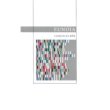 It’s certainly worth checking out of the library if you can find it.

 I Just Read About That...
Leave a comment